The Noble Qur’an is a کلام اللہ (Kalam Allah), the eternal message, preserved forever, for all humanity. Allah’s Word was revealed, for the last time, to the final Messenger, the Prophet Muhammad (PBUH). Within two centuries of the founding of Islamic state, Muslims had spread the Message of Din Al- Haq east to the border of China and west to Spain and the shores of Atlantic. The secret of chines papermaking, first passed on the Muslims in Baghdad, created an ‘Information explosion’ that reverberated throughout Dar Al-Islam. Inexpensive paper permitted the dissemination of kalam Allah and eventually, the transcription of hundreds of thousands of Ahadith. The Islamic world soon developed a creative and literate culture of high civilization. This story chronicles the nine hundred yearlong odysseys of a beautiful handwritten Qur’an produced in Cordoba in the 11th century. The plight of the Moriscos(Arabic Al- Muriskiyyun), the last Muslims of Al- Andalus, becomes an integral part of the amazing story of well-traveled Qur’an.
-
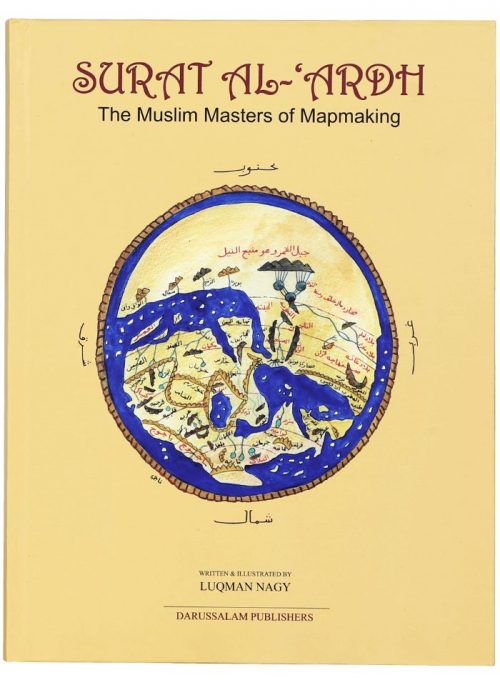 Cartography, a word from Greek origin, is the science and art of mapmaking and is an endeavor paramount in the intellectual development of human being. When the Muslims of 9th century Baghdad decided to preserve the totality of classical Greek science in Arabic, the new language of civilization, they discovered Ptolemy. His Geographia was a guide to mapmaking and enormously important for all Muslim mapmaking. Over the next five hundred years, Muslims increased their knowledge of geography and perfected their mapmaking skills, eventually producing maps of great complexity and beauty. Modern cartography has its origin in the many breakthroughs made by Muslim scientist, centuries ago. This book is not meant to be a history of maps, but a celebration of some of the achievement of Muslim master mapmaker. Insha’ Allah, readers of this book will be encouraged to view maps of all kinds with greater appreciation, knowing the great amount of labor and learning that have facilitated their production.
 -
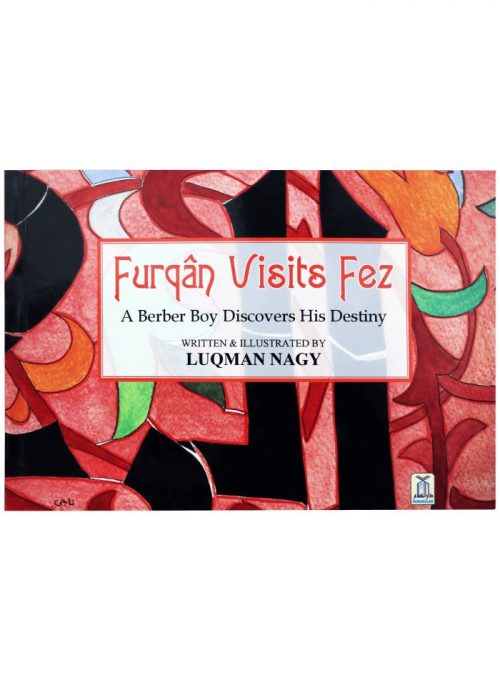 For centuries, the beautiful Moroccan city of Fez has been the cultural jewel of all northwest Africa. Its bustling traditional suq remains the heart of the present-day city. This book introduces its readers to Fez`s ancient suq, where 30,000 master craftsmen, representing hundreds of different trades, live and work. Readers will befriend Furqan, a Berber boy who visits this suq for the first time and makes a life-changing decision there.
 -
 Uncle Rifat lives in the Turkish city of Konya. He works very hard in his beautiful garden and thanks to Allah daily for all His many blessings. Can you count the blessings in Uncle Rifat`s garden.
 -
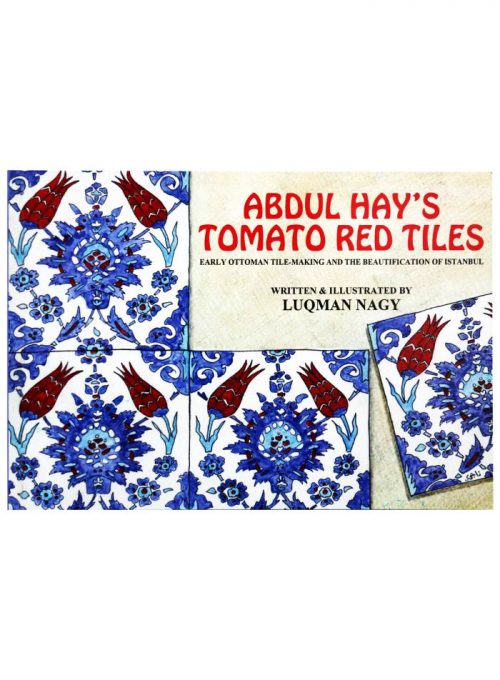 This book recounts the remarkable the markable story of early Ottoman tile-making and the beautification of Istanbul. for a brief period in the late 15th and early 16th centuries, the fine art of tile-making was perfected by the artisans of Iznik. Their art still remains unsurpassed in its brilliance. And after five hundred years, Ciniciii Abdul Hay`s Tomato Red Tiles still Adron countless mosques throughout the city.
 -
 This book by Luqman Nagy is an introduction to the life and times of Ibn Khaldun, the 14th-century Maghribi master of the Mugaddhnah. His unique philosophy of history was eloquently laid out in the Mugaddimah (`Introduction`), a book that, in the words of the British historian, Arnold J. Toynbee, is `undoubtedly, the greatest work of its kind that has ever yet been created by any mind in any time or place.` He is one of those shining stars that contributed so richly to the understanding of Civilization. In order for one to understand and appreciate his work, one must understand his life. This book will enable readers to better understand and appreciate Ibn Khaldun`s innovative contributions to the study of history that made Europeans dub him both the `Father of Sociology` and the `Father of Economics.